Adapting Flame Coloring to Dry, High-altitude Climates
干燥高海拔气候的火焰着色适配
标签:干燥气候, 高海拔, 氧分压, 火焰, 适配
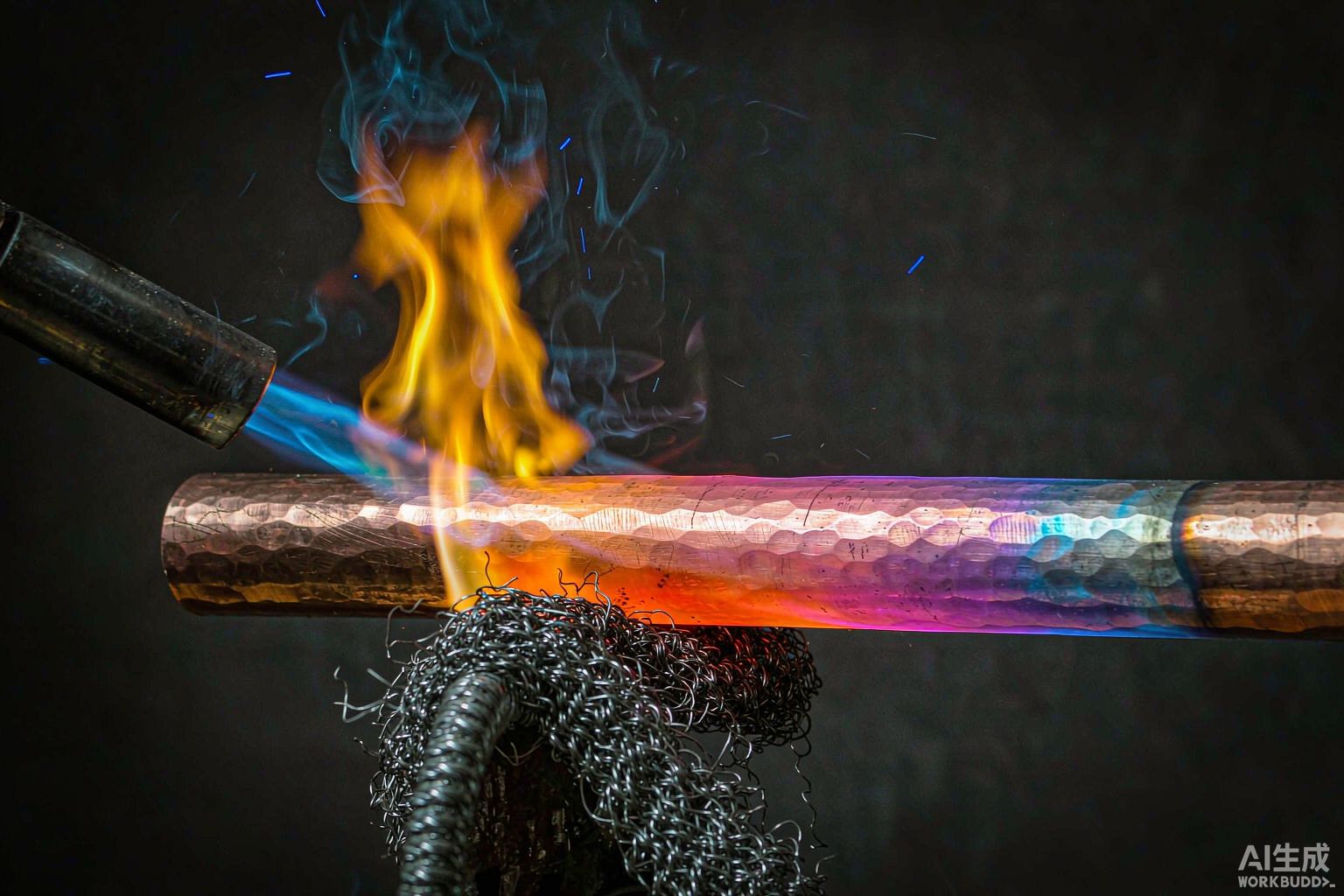
海拔 2000 m 以上大气氧分压下降约 20%,丙烷火焰温度与氧化速率随之降低,按平原参数施工色偏浅、偏黄且带杂斑。适配调整:喷嘴距离由 8–10 cm 缩至 5–6 cm,走焰速度放缓约 30%,必要时改用氧气助力喷枪。干燥环境(RH < 30%)氧化膜细而脆,着色前 24 h 将板材移入车间平衡温湿度,避免表面结露成斑;完成色后当日内蜡封,防止干涉膜在剧烈昼夜温差下微裂失色。
Above 2000 m altitude the oxygen partial pressure drops ~20%, lowering flame temperature and oxidation rate — plain-elevation parameters yield pale, mottled yellow-leaning colors. Compensate: close nozzle distance from 8–10 cm to 5–6 cm, slow travel ~30%, or switch to an oxygen-assisted torch. In dry air (RH < 30%) the oxide film is fine but brittle: acclimate sheet metal indoors 24 h before coloring to avoid condensation blotches, and wax-seal the same day so the interference film does not micro-crack under wide diurnal swings.