Nordic Planishing: Skultuna and Scandinavian Copperware
瑞典 Skultuna 与北欧铜器打平传统
标签:Skultuna, 瑞典, 北欧工艺, 缎面
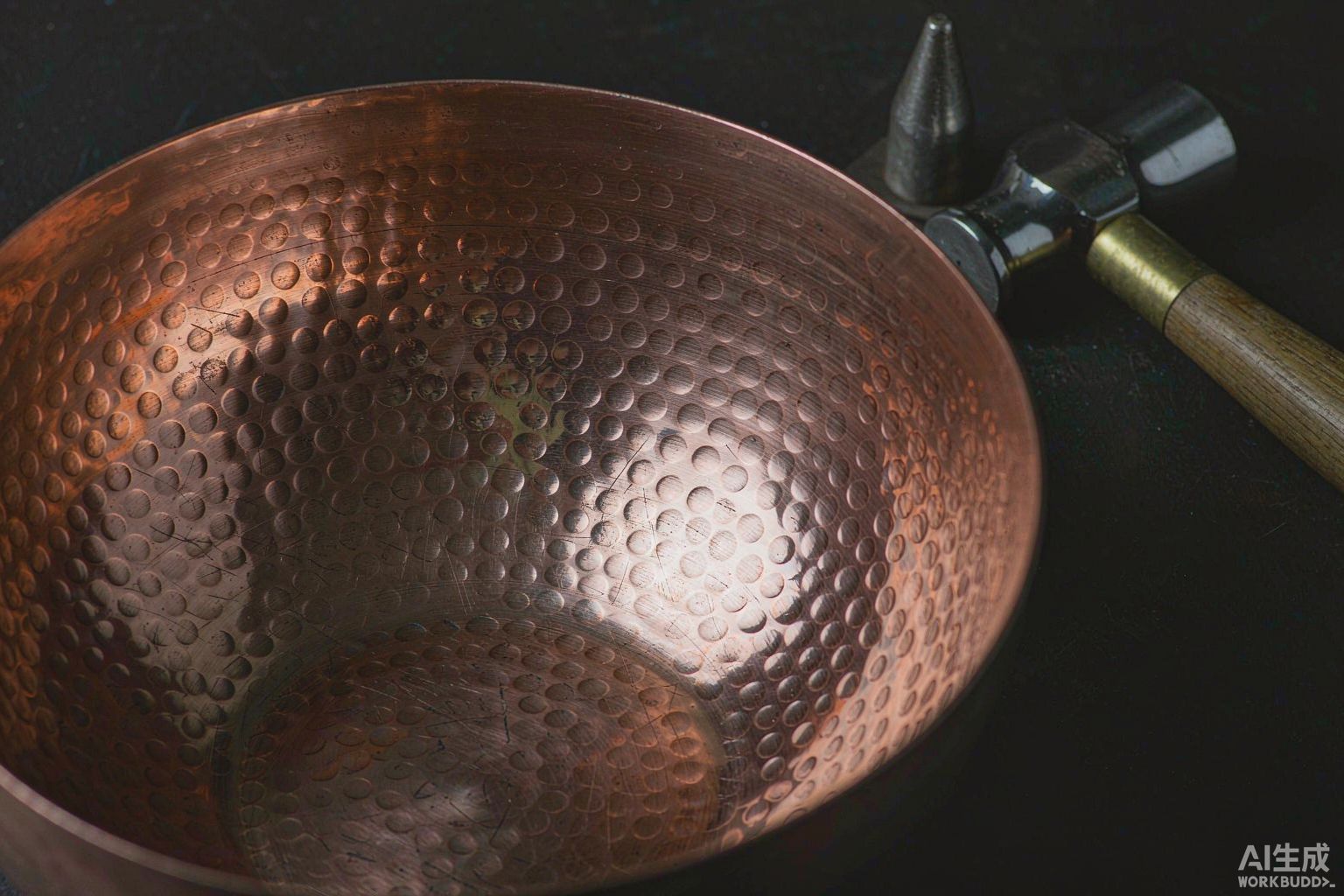
瑞典 Skultuna 黄铜厂创立于 1607 年,是全球仍在运营的最古老金属作坊之一:其手工壶体成形后以轻打平收整——走锤轻、重叠密(约 65%),先径向再环向两遍,把壁厚差控制在 0.1 mm 以内。北欧器皿讲究"哑光缎面"而非镜面,末道以皂石与菜籽油逐级抛磨,锤痕被压成雾面肌理。斯德哥尔摩 Konstfack 工艺设计学院至今将这套"先密后抛"的打平次序列为基础课程。
Sweden's Skultuna brass works, founded in 1607, is among the world's oldest metal workshops still running: its hand-raised vessels are closed with light planishing—soft blows, dense ~65% overlap, two passes radial then circumferential—to hold wall variation under 0.1 mm. Nordic taste wants a satin, not a mirror: soapstone and rapeseed oil progressively press the marks into a misted texture. Stockholm's Konstfack still teaches this "dense-then-burnish" planishing order as a foundation module.